“How do you know when a movement is healthy or not? What do you base this on. The difficult part is still to find out what is right or wrong, because a horse does not say that with words. So how do you recognize it? Is there a method involved that describes how healthy movement should be or not at all? What is so different from BAR? And are there also similarities?”
We use movement and sensations to expand possibilities, create opportunities for new ways to feel, move, act, and to have more choice.
We respect the horse’s innate wisdom and recognise that our horse created the compensation and restriction out of a desire to feel safe. We aim to create a safe learning environment for the horse, so the horse can have more choice in how it moves and feels. It reminds the horse how to move with greater comfort and ease by supporting and moving the horse in specific, non-habitual ways to restore body awareness and freedom of movement.
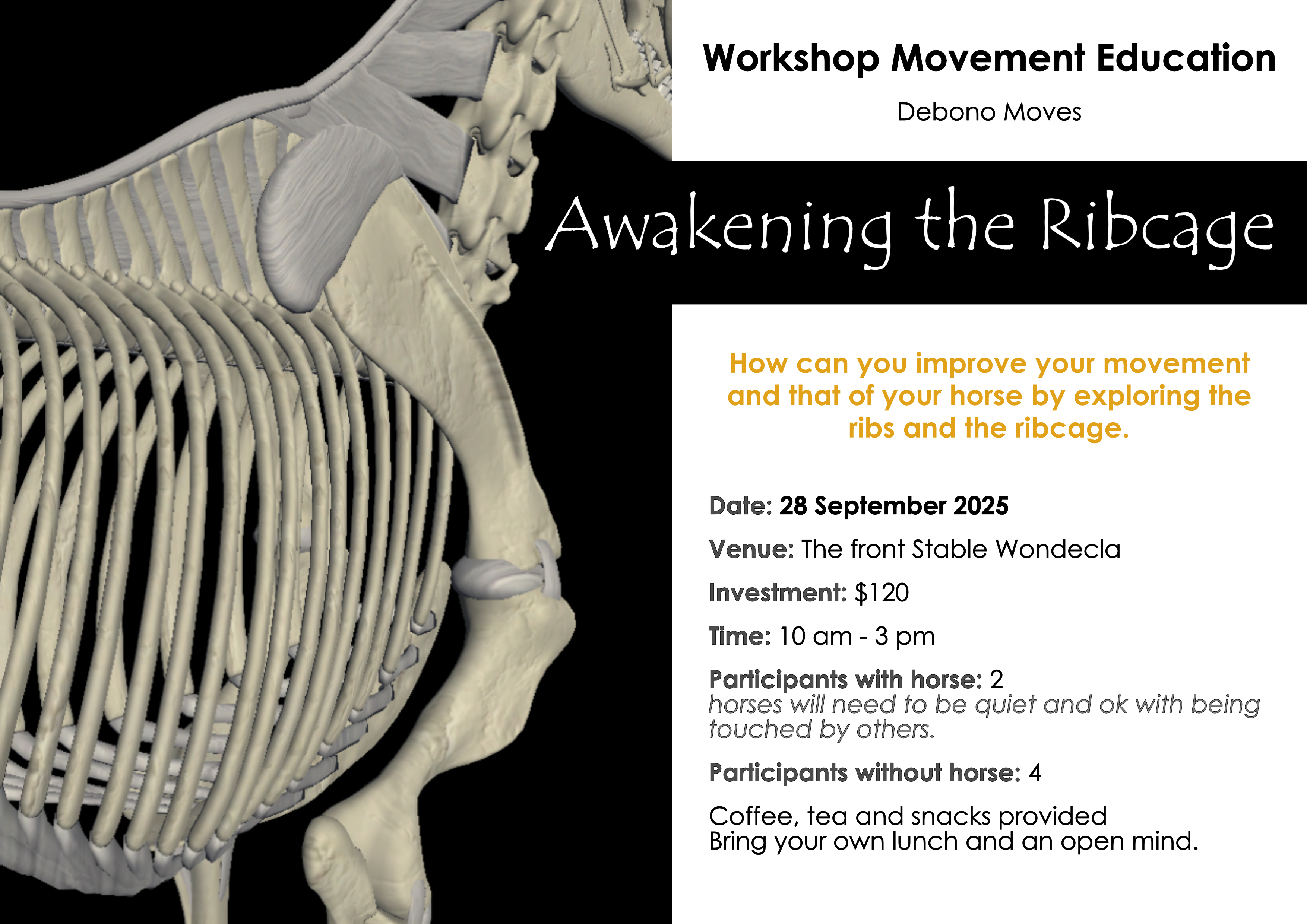
To give you an example, we often work with the horse’s sternum and ribcage as that is where most of the time the restrictions are (no difference as with the human). By placing our hands on the sternum, we gently bring the sternum away from us and towards us and only go as far as feels easy, what means that the movement might be tiny. We might find that the movement away from us feels easier than towards us. This is great information that we keep in mind, while exploring other directions of movement in the sternum, like from side to side. We can then slowly start to see if it is possible to create a circle, this might not be a true circle as some directions might not be as easy to go to as others but by staying in that realm of ease (healthy movement) you can make little suggestions that it might be possible to move also into the other directions and you will find that the other direction will become easier as well. This might not all be super easy in one session but you can work towards it. Often you will find that after a pause, the movement will be easier in all directions.
In this work there is no real “right or wrong” if you stay in that realm of ease. The more possibilities of easy movement the horse has the healthier and happier the horse.
As the human working with the horse, you need to create a feel for staying in that realm of ease, recognising when there are restrictions and stop before you reach that point. The horse always has the freedom to move away from you.
How is it different from BAR? I think there are a lot of similarities, that is why I like it so much and it fits in so well. But the main difference is that in the DM we are not looking for training certain movements, we are educating the brain to move in as many ways as possible at ease. From here you can start to strengthen specific movements that might be required for specific things like riding. This is why we do not call it exercises but movement education.